

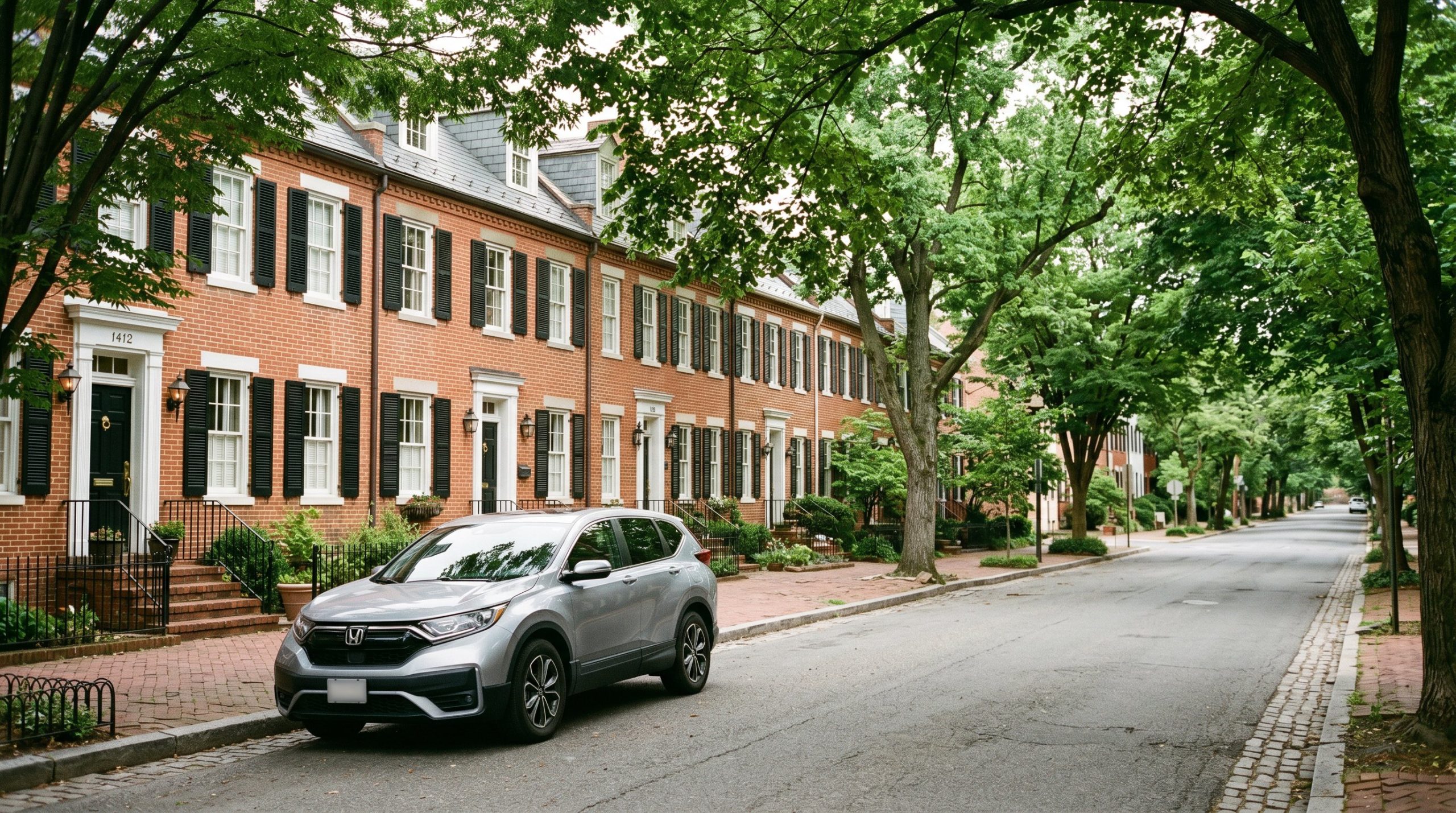
The Washington DC metro spans three jurisdictions with different rules: the District itself, Maryland, and Virginia. That tri-jurisdictional structure is the defining feature of selling a car here, because the paperwork, taxes, and process differ depending on which side of the line you and your buyer are on. Beyond the jurisdictional complexity, DC is an affluent, highly educated, transient market with strong demand for late-model vehicles and a population that turns over frequently as people move in and out for government, military, and professional roles.
This page covers the realistic options for selling a car in the DC metro, what makes the local market distinct, the paperwork requirements across DC, Maryland, and Virginia, and how the Clairvo process works for sellers across the region.
Free to use. No obligation. Competing offers from multiple licensed dealers across DC, Maryland, and Virginia.
Selling a Car in Washington DC: The Three Real Options
Every DC-area seller is choosing among three basic paths, each with a different balance of price, speed, and effort.
Private Sale
A private sale typically produces the highest sale price. In the DC area, the experience depends heavily on where you live: dense parts of the District and inner Arlington or Alexandria have parking and showing challenges, while the suburban parts of Maryland and Virginia are more accommodating. The tri-jurisdictional structure adds complexity to private sales when buyer and seller are in different jurisdictions, since title and registration steps differ. Scam risk applies as everywhere.
Single-Buyer Platforms
Carvana, CarMax (which is headquartered in nearby Richmond, Virginia), and similar single-buyer platforms produce one offer with no negotiation and handle pickup. The convenience is real, and they handle the cross-jurisdiction paperwork. The limitation is that a single buyer’s offer is rarely the highest available because there is no competition. Our guide on selling to Carvana covers how the single-buyer model works.
Multi-Dealer Competition Through Clairvo
Clairvo routes your vehicle to multiple licensed dealers across the DC metro who bid competitively. You submit once, see competing offers, and choose the best one. Licensed dealers handle the jurisdiction-specific paperwork as part of the transaction, which removes the cross-border complexity while delivering the price benefit of competition. More on how Clairvo works.
What Makes the Washington DC Used Car Market Different
Three Jurisdictions, Three Sets of Rules
The DC metro crosses the District of Columbia, Maryland, and Virginia, each with its own DMV, title process, tax structure, and inspection requirements. A seller in Bethesda (Maryland), a seller in Arlington (Virginia), and a seller in the District follow different rules. This is the single most important local factor, and it is why many DC-area sellers prefer transactions where a dealer handles the paperwork rather than navigating cross-jurisdiction private sales themselves.
Affluent, Late-Model-Oriented Demand
The DC area is one of the most affluent and highly educated metros in the country. Demand skews toward late-model vehicles, certified pre-owned options, and reliable premium brands. Sellers of well-maintained, late-model vehicles often find strong demand. The professional population also values convenience, which supports the appeal of streamlined selling options.
Transient Population Creates Steady Turnover
DC has a highly transient population, with people regularly moving in and out for government appointments, military assignments, diplomatic postings, and professional roles. This creates steady year-round demand from arrivals who need vehicles and steady supply from departures who need to sell, often on a tight timeline. Sellers on a deadline (a PCS move, a job relocation, an overseas posting) particularly benefit from the speed of competing dealer offers.
AWD Demand and Four Seasons
The DC area has four distinct seasons with meaningful winter weather, which supports demand for AWD vehicles, especially in the Maryland and Virginia suburbs. AWD crossovers and SUVs tend to sell well, particularly heading into fall and winter.
What DC-Area Sellers Need: Paperwork Across Three Jurisdictions
Because the DC metro spans three jurisdictions, the exact requirements depend on where the vehicle is titled. Here is the general picture for each.
District of Columbia
DC requires the signed title with odometer disclosure, and the DC DMV handles the transfer. DC has its own excise tax structure based on vehicle weight and fuel efficiency. Sellers should notify the DC DMV of the sale to end liability.
Maryland
Maryland requires the signed title with odometer disclosure, and a Maryland Notice of Security Interest Filing or lien release if applicable. Maryland uses a bill of sale (and for vehicles 7 years or older, a notarized bill of sale, Form VR-181, can affect how tax is calculated). Maryland requires a safety inspection for vehicles being titled and registered, which the buyer typically handles, but it can affect the transaction.
Virginia
Virginia requires the signed title with odometer disclosure. Virginia has eliminated its annual safety inspection requirement under recent changes, simplifying the process. Virginia uses a purchaser’s statement and the buyer pays a titling tax based on the sale price or vehicle value.
Across all three jurisdictions, removing or transferring your license plates and notifying the relevant DMV of the sale protects you from post-sale liability. Our broader guide on documents needed to sell a car covers the general requirements. Given the complexity, selling to a licensed dealer who handles the jurisdiction-specific steps is often the simplest path in this market.
DC Metro Coverage: Jurisdictions and Surrounding Areas
Clairvo connects sellers with licensed dealers across the full DC metro, spanning all three jurisdictions. Coverage includes:
- District of Columbia: All DC neighborhoods and wards
- Northern Virginia: Arlington, Alexandria, Fairfax, Falls Church, Reston, Herndon, Tysons, Vienna
- Maryland suburbs: Bethesda, Silver Spring, Rockville, Gaithersburg, Bowie, College Park, Hyattsville
- Outer suburbs: Loudoun County (Leesburg, Ashburn), Prince William County (Manassas, Woodbridge), and Montgomery and Prince George’s county communities
Because dealers across all three jurisdictions can bid, sellers are not limited to dealers in their own jurisdiction. A seller in Maryland may receive a strong offer from a dealer in Virginia who has specific demand for that vehicle, and the dealer handles the cross-jurisdiction paperwork.
How the Clairvo Process Works for DC-Area Sellers
Step 1: Submit Your Vehicle Online
Enter your vehicle details (year, make, model, mileage, condition) through the Clairvo platform. The submission takes a few minutes from your phone or computer.
Step 2: Receive Competing Offers from DC-Area Dealers
Licensed dealers across DC, Maryland, and Virginia review your vehicle and submit competing bids. You typically see offers within 24 to 72 hours. Each offer is a real, binding number from a licensed dealer, not an estimate.
Step 3: Choose the Best Offer or Decline All
Review the competing offers on a single dashboard. Choose the one that works best for you, or decline them all with no obligation. There is no pressure and no cost to see what dealers will pay.
Step 4: Complete the Sale with the Accepting Dealer
Arrange to complete the transaction with the winning dealer, who handles the jurisdiction-specific title and registration paperwork. Payment is typically same-day once the vehicle is verified. This is especially valuable for sellers on a tight timeline due to a move or relocation.
Free to use. No obligation. See what multiple licensed dealers will pay for your car.
Why Competing Offers Matter More in a Market Like Washington DC
The tri-jurisdictional structure of the DC market makes private sales unusually complicated when buyer and seller are on different sides of the line. Competing dealer offers sidestep that complexity entirely: the dealer handles the paperwork regardless of jurisdiction. Beyond the paperwork advantage, the affluent late-model-oriented demand means the spread between dealers can be meaningful for desirable vehicles.
Competition surfaces the strongest offer while a licensed dealer handles the cross-border details. For the many DC-area sellers facing a relocation deadline, the combination of speed, simplicity, and competitive pricing is especially valuable. Our guide on getting multiple dealer offers covers why competition consistently produces stronger pricing, and our guide on what your car is worth covers the valuation factors that matter most.
Selling Your Car in Washington DC: Frequently Asked Questions
How long does it take to sell a car in the DC area?
Through a multi-dealer platform like Clairvo, you typically see competing offers within 24 to 72 hours and can complete the sale within a few days. This speed is especially valuable for the many DC-area sellers facing relocation or PCS-move deadlines. A private sale takes longer and is complicated by the tri-jurisdictional paperwork when buyer and seller are in different jurisdictions. Single-buyer platforms like Carvana take a few days to a week including pickup.
Do the rules for selling a car differ between DC, Maryland, and Virginia?
Yes, significantly. Each jurisdiction has its own DMV, title process, tax structure, and requirements. DC has an excise tax based on weight and fuel efficiency; Maryland may require a notarized bill of sale for older vehicles and a safety inspection for titling; Virginia uses a titling tax and has eliminated its annual safety inspection. This is the single most important factor in the DC market, and it is why many sellers prefer a dealer transaction that handles the jurisdiction-specific paperwork.
Are AWD vehicles worth more in the DC area?
Often, particularly in the Maryland and Virginia suburbs. The DC area has four distinct seasons with meaningful winter weather, which supports demand for AWD crossovers and SUVs, especially heading into fall and winter. Getting competing offers reveals what your specific vehicle commands across the metro’s dealers.
I am being relocated and need to sell fast. What are my options?
The DC area’s transient population means relocation-driven sales are common. For speed, a multi-dealer platform produces competing offers in 24 to 72 hours with same-day completion, and the dealer handles the jurisdiction-specific paperwork. Single-buyer platforms like Carvana and CarMax also work well for fast sales with pickup service. Both are faster and simpler than a private sale, which matters when you are on a tight moving timeline.
Can I sell my car in the DC area if I still owe money on it?
Yes. If you still owe money, your lender holds the title and the loan must be paid off as part of the sale. Dealers handle this routinely: they pay off your lender directly and pay you the difference if your car is worth more than the payoff. Our guide on selling a car you still owe money on covers the process. Selling to a dealer is often simpler than a private sale when there is a loan involved, especially given the tri-jurisdictional complexity here.
How much does it cost to use Clairvo to sell my car in the DC area?
Nothing. Clairvo is free for sellers. You submit your vehicle, receive competing offers from licensed dealers across DC, Maryland, and Virginia, and choose the best one with no cost and no obligation. If you decline all the offers, there is no charge. The platform earns through the dealer side of completed transactions, not from sellers.
Free to use. No obligation. See what your car is worth across DC, Maryland, and Virginia.