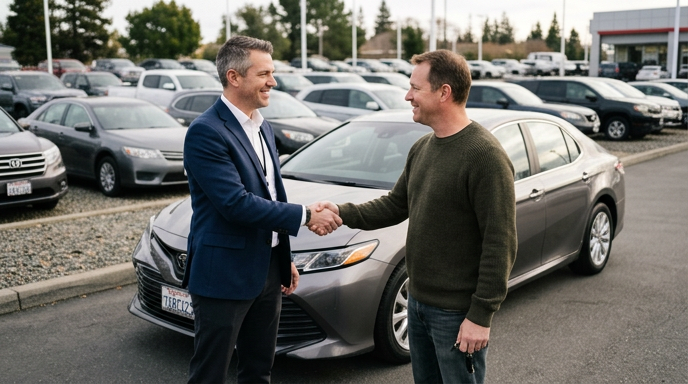



How should dealers approach used car acquisition in 2026? Build a diversified sourcing strategy across auctions, trade-ins, the service drive, and direct-from-consumer channels, then manage the two levers that decide profitability: cost per unit and days to turn. In a high-carrying-cost market, acquisition is no longer just about buying cheap, it is about buying cars that sell fast. This guide walks through the full picture.
Acquisition is the foundation of used-car profit. Get it right and everything downstream is easier. This guide pulls the pieces together, and links out to deeper reads on each. For a channel-by-channel comparison of buying services, see the best used car buying services for franchise dealers.
The sourcing channels
Every acquisition strategy draws on some combination of auctions, trade-ins, the service drive, lease and CPO returns, and direct-from-consumer platforms. Each has a different cost profile and reliability. The full sourcing landscape and street sourcing playbook cover the tactics in detail.
The two levers that decide profit
Cost per unit
What you pay to acquire a car, including fees and transport, sets your starting margin. Auctions carry the most competition and cost; trade-ins and service-drive buys usually cost less. See acquisition cost compared across channels.
Days to turn
How fast a car sells determines how much carrying cost it accrues. In a high-rate environment, a slightly pricier car that turns fast can beat a cheap one that sits. Track it with days supply versus days to turn.
Reconditioning speed
Every day a car sits in recon is a day it costs money without being sellable. Fast front-line times directly improve turn. See reconditioning costs and margins.
Pricing what you acquire
Acquisition and pricing are linked. Buy to local demand and price to market so cars turn before carrying cost erodes gross. See used car pricing strategy.
Building a resilient strategy
The strongest acquisition programs diversify so no single channel disruption stalls inventory. Weight toward low-cost, fast-turning sources, use auctions to fill gaps, and add a direct-from-consumer channel to reach clean cars and sellers off the lot. The 8 inventory strategies for franchise dealers expands on this.
To turn this guide into your own numbers, our dealership ROI calculator for vehicle acquisition lets you model cost per unit and turn across every sourcing channel side by side.
Frequently asked questions
What is the most important factor in used car acquisition?
Balancing cost per unit against days to turn. Buying cheap matters less than buying cars that sell quickly, because carrying cost erodes the gross on slow units in a high-rate market.
How can dealers lower acquisition cost?
Diversify beyond auctions toward trade-ins, the service drive, and direct-from-consumer channels, which carry less competition and fees. Buy to local demand so cars turn fast and accrue less carrying cost.
Why does reconditioning speed matter for acquisition?
A car is not sellable until it clears recon, and every day there adds carrying cost. Fast reconditioning improves turn and protects the margin you locked in at acquisition.
What is the newest acquisition channel in 2026?
Direct-from-consumer platforms, which route local sellers to participating dealers. They deliver clean cars in known condition at competitive cost and reach sellers who would not visit a dealership.
If you want to add a competing-offer channel to your acquisition mix, it costs nothing to see how the Clairvo dealer network fits into the way you already source.
Dealers can also review current listings and requirements directly at dealerforesite.com before reaching out.